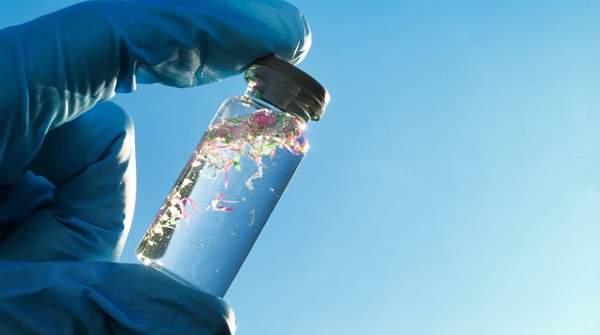
Nanoplastics are not yet a regulated contaminant, and no major food authority currently concludes they pose a proven human health risk. But regulators on both sides of the Atlantic have formally acknowledged that these particles are entering the food supply, that detection methods are inadequate, and that scientific advice with regulatory consequences is coming. For supply chain managers, the practical question is not whether nanoplastics are dangerous today—it is whether your company will be prepared when the evidence base firms up.
Understanding Nanoplastics in Supply Chains: An Emerging Business Risk
Nanoplastics are plastic particles at the nanoscale, small enough that some studies suggest they may cross biological barriers and accumulate in tissues. The U.S. Environmental Protection Agency's national strategy on plastic pollution notes that micro- and nanoplastics have been found in the human body, but that not enough is known about how they may affect health. The agency flags potential threats to food safety "as nanoplastics enter food production throughout supply chains" as a specific concern.
That framing matters for business readers. The EPA is not describing a consumer problem; it is describing a supply chain problem, with contamination occurring across production, handling, and distribution. The U.S. Food and Drug Administration similarly states that some evidence suggests microplastics and nanoplastics are entering the food supply, primarily through the environment, while continuing to monitor the research. The risk for companies is therefore anticipatory: exposure to future rules, testing requirements, and market expectations built on science that is still forming.
How Nanoplastics Enter and Impact Supply Chains
The European Food Safety Authority reports that micro- and nanoplastics present in the environment can enter the food chain, including drinking water, and that microplastics have been detected in foods such as mussels, meat, honey, vegetables, beer, and table salt. Some studies suggest plastic particles may enter human or animal cells and can carry contaminants, though major knowledge gaps remain.
Contamination is cumulative rather than isolated. A peer-reviewed framework published in the MDPI journal Food and Environmental Toxicology describes logistics as an "amplification stage," where repeated releases from handling materials and indoor microenvironments accumulate over time and across batches, with contributions depending on commodity type, storage duration, and the intensity of mechanical contact. The same analysis emphasizes that human exposure emerges from cumulative contributions across multiple stages—environmental sources, food production, supply chain dynamics, and consumer environments—rather than from single contamination events.
Packaging is a distinct and well-documented pathway. An EFSA technical report and a peer-reviewed study by the Food Packaging Forum reached similar conclusions: micro- and nanoplastics can enter foodstuffs from the normal and intended use of food contact materials, making those materials a plausible and likely source of human exposure. Current regulations, however, do not require systematic assessment of particle migration from food contact materials into food.