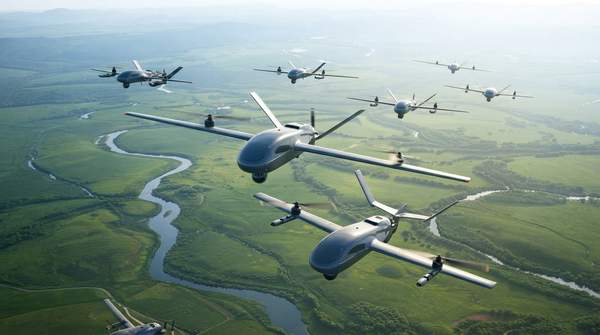
For investors and entrepreneurs navigating the rapidly evolving drone technology sector, understanding the key metrics that drive innovation is crucial for making informed strategic decisions. The global market for civil unmanned aerial systems is projected to reach a total of US$150 billion between 2023 and 2032, underscoring the need for a structured approach to evaluating technological advancements and national ecosystem strengths.
This article outlines a framework for assessing drone technology innovation, integrating patent data with comprehensive ecosystem readiness factors. By examining metrics such as patent volume and quality, alongside components of the Drone Readiness Index, stakeholders can gain a clearer picture of a technology's potential and the supportive environment in which it operates.
Key Metrics for Drone Technology Innovation
Evaluating innovation in drone technology requires a multi-faceted approach, moving beyond mere technological capability to encompass the broader ecosystem. Two primary categories of metrics stand out: intellectual property indicators and national readiness factors.
Intellectual property, particularly patents, offers insights into a country's or company's innovative output. A report by LexisNexis, published in October 2026, highlights two critical patent metrics: patent volume and patent quality. Patent volume indicates the sheer number of inventions, while patent quality, measured by value, reflects the significance and impact of those inventions. These metrics provide a tangible measure of innovation output and competitive positioning.
Beyond patents, the Drone Readiness Index (DRI), developed by Drone Industry Insights, offers a comprehensive framework for assessing a national ecosystem's capacity to foster and integrate drone technology. The DRI evaluates 42 top drone markets based on six key metrics: applicability, human resources, administrative infrastructure, operational limits, airspace integration, and social acceptance. These factors collectively determine how conducive a country's environment is to drone development and deployment.
Global Innovation Landscape: US vs. China
A comparative analysis of leading national ecosystems, particularly the United States and China, reveals distinct strengths and strategic priorities in drone technology innovation. According to the LexisNexis report, Chinese companies led in drone patent filings in 2024, accounting for 44 percent of the world's total. In contrast, American firms held 17 percent of global drone patents.
Despite China's lead in patent volume, the report indicates that US drone patents were on par with China's when measured by value. This suggests that both countries are roughly even in the total global patent asset value for drone technology, indicating a "neck-and-neck" competition in the quality of next-generation drone patents. Notably, DJI, a Shenzhen-based industry leader, has seen its dominance in patent filings decline, holding only 4 percent of the industry's total patent assets in 2024, a significant drop from approximately 24 percent at the end of 2018.
Understanding the Drone Readiness Index Components
The Drone Readiness Index (DRI) provides a structured way to evaluate the broader environment for drone innovation, moving beyond just patent counts. Each of its six components offers a unique lens through which to assess a national ecosystem's strengths and weaknesses:
- Applicability: This metric considers the potential uses and demand for drone technology within a country, reflecting the breadth of industries and services that can benefit from drone integration.
- Human Resources: The availability of skilled personnel, including engineers, operators, and researchers, is vital for innovation and deployment. This factor assesses the talent pool supporting the drone industry.
- Administrative Infrastructure: This component examines the regulatory and governmental support structures in place. For instance, states in the US are ranked on their preparedness for commercial drone services based on factors like airspace lease laws, avigation easement laws, and the presence of drone program offices or task forces within their departments of transportation. Such infrastructure can reduce litigation risk and anticipate future operational issues.
- Operational Limits: This refers to the practical restrictions and allowances for drone operations, including flight altitudes, restricted zones, and other technical or geographical constraints that impact deployment.
- Airspace Integration: The ability to safely and efficiently integrate drones into existing airspace systems is critical. This includes advancements in Unmanned Traffic Management (UTM) activities and clear regulatory frameworks for shared airspace.
- Social Acceptance: Public perception and acceptance of drone technology play a significant role in its widespread adoption. This metric considers community attitudes, privacy concerns, and the overall willingness of society to embrace drones for various applications.
Drone Innovation Evaluation Framework
To systematically assess a drone technology's innovation profile and the strength of its supporting national ecosystem, investors and entrepreneurs can utilize a conceptual framework that integrates patent metrics with the Drone Readiness Index components. This framework helps in identifying areas of strength and potential challenges, guiding strategic investment and development decisions.
| Evaluation Dimension | Key Metric/Factor | Considerations for Assessment |
|---|---|---|
| Innovation Output (Patent Data) | Patent Volume | High volume indicates active R&D and a strong pipeline of inventions. China leads globally with 44% of drone patents, compared to 17% for US firms, based on a LexisNexis study up to 2024. |
| Patent Quality/Value | High quality suggests impactful, valuable inventions. US drone patents are on par with China's in value, according to the LexisNexis study up to 2024. | |
| Ecosystem Readiness (DRI Components) | Applicability | Assess the breadth of potential applications and market demand for drone technology within the target national ecosystem. |
| Human Resources | Evaluate the availability and quality of skilled talent (engineers, operators, researchers) to support drone development and operations. | |
| Administrative Infrastructure | Examine the regulatory environment, including airspace lease laws, avigation easement laws, and the presence of government drone program offices or task forces. | |
| Operational Limits | Understand the practical restrictions and allowances for drone flights, including regulations on altitude, restricted areas, and operational procedures. | |
| Airspace Integration | Assess the progress and plans for integrating drones into national airspace, including Unmanned Traffic Management (UTM) initiatives and regulatory clarity. | |
| Social Acceptance | Gauge public perception, privacy concerns, and the overall societal willingness to adopt and support drone technology applications. |
This framework is conceptual and not a numerically weighted tool, as explicit evidence for such weighting is not available. However, by systematically considering each dimension, stakeholders can develop a comprehensive understanding of a drone technology's innovation profile and the strength of its supporting national ecosystem.
Informing Strategic Decisions in Drone Technology
Investors and entrepreneurs should utilize a multi-faceted evaluation framework that combines patent metrics with national ecosystem readiness factors to make informed strategic investment and development decisions. A thorough assessment of both a technology's intellectual property strength and the supportive environment it operates within is essential for long-term success in the drone sector.
To stay ahead, stakeholders should monitor changes in national patent filings, Drone Readiness Index rankings, and regulatory developments in target markets. These indicators provide crucial insights into the evolving landscape of drone innovation and help identify emerging opportunities and potential risks.