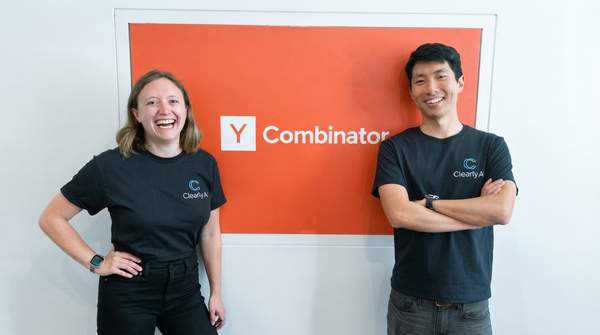
A small AI firm in Palo Alto offers $50,000 in compute credits and dedicated engineering support to promising AI projects, no equity required. Such initiatives are growing, providing critical infrastructure and expertise that accelerate early-stage development. This allows founders to focus on product innovation without immediate ownership dilution.
Early-stage startups typically trade equity for essential resources. Now, a new wave of AI firms provides these resources for free, often without demanding ownership. This challenges conventional funding. VentureBeat reports 30% of new AI founders explore non-dilutive providers before traditional VCs. These offerings are significant: non-dilutive resources can exceed $100,000 for a typical early-stage AI project, according to AngelList Data. Crucially, many come from well-funded AI companies themselves, not just cloud providers, states Crunchbase. A new, centralized pipeline for AI innovation is indicated, prioritizing speed over diverse investment and reshaping how early-stage AI companies are built.
8 AI Startups and Platforms Offering Free Resources in 2026
1. Anthropic AI Partner Program
Best for: Teams building applications directly on the Claude API or requiring physical co-working space.
Anthropic offers free office space in key tech hubs and direct access to its advanced Claude API. This supports startups integrating Anthropic's models.
Strengths: Direct API access; dedicated office space; mentorship. | Limitations: Focus on Claude ecosystem; competitive selection. | Price: Free (non-dilutive).
2. OpenAI Startup Fund & Programs
Best for: Startups leveraging OpenAI's models (GPT, DALL-E) and seeking compute credits and strategic guidance.
OpenAI's 'Startup Fund' provides compute credits and mentorship, sometimes without taking direct equity in the earliest stages, reports The Information. Access to proprietary large language models (LLMs) is a significant draw for founders, notes MIT Technology Review. Together, these offerings position OpenAI as a gatekeeper to essential AI infrastructure, attracting founders who prioritize model access.
Strengths: Generous compute credits; mentorship from OpenAI experts; access to cutting-edge models. | Limitations: Can involve future equity or commercial agreements. | Price: Free for credits/mentorship, potential future equity.
3. Google Cloud for Startups
Best for: AI startups requiring extensive cloud infrastructure, specialized AI/ML services, and global scaling capabilities.
Google Cloud offers startup programs with free credits, providing substantial compute, storage, and AI/ML platform resources, states Forbes.
Strengths: Large credit allocations; access to Google's AI tools; global infrastructure. | Limitations: Credits expire; requires commitment to Google Cloud. | Price: Free credits, then pay-as-you-go.
4. AWS Activate for Startups
Best for: Startups building on AWS, needing scalable compute, storage, and a wide array of specialized services for AI development.
AWS Activate provides free credits, technical support, and training for eligible startups, covering initial infrastructure costs.
Strengths: Broad service catalog; extensive developer community; flexible infrastructure. | Limitations: Complex pricing post-credits; requires commitment to AWS. | Price: Free credits, then pay-as-you-go.
5. AI Forge
Best for: Teams seeking a comprehensive development environment and engineering support with a revenue-share model.
'AI Forge' provides a full-stack development environment and engineering support for a 5% revenue share post-launch, not equity, reports Startup Insider. This offers a non-dilutive path for development resources.
Strengths: Full development environment; dedicated engineering help; no upfront equity. | Limitations: Revenue share commitment; less direct capital. | Price: 5% revenue share post-launch.
6. Proprietary LLM Access Programs
Best for: Developers needing early access and support for new, cutting-edge large language models from various providers.
Smaller AI labs and well-funded startups offer early, often free, access to their proprietary LLMs. These programs foster ecosystem development by integrating models into diverse applications.
Strengths: Access to specialized models; direct support from model creators; early feature access. | Limitations: Model lock-in; terms can vary widely. | Price: Often free for early access, then API usage fees.
7. Data Sharing Partnerships
Best for: Startups whose product development benefits from specific datasets and are willing to share anonymized data in return.
Some AI startups offering resources require data sharing or preferential access to future products, reports Bloomberg. These partnerships provide valuable data for aggregated usage insights.
Strengths: Access to proprietary datasets; potential for co-development. | Limitations: Data privacy concerns; intellectual property complexities. | Price: Data sharing or preferential access.
8. Talent Pipeline Programs
Best for: Founders and teams seeking mentorship, strategic guidance, and potential acquisition pathways from larger AI entities.
These programs often act as a talent pipeline, allowing the host AI startup to identify and potentially acquire promising projects, notes the Wall Street Journal. Resources are exchanged for a closer relationship.
Strengths: Strategic mentorship; potential for acquisition or partnership; networking. | Limitations: Implicit alignment with host's strategy; less independent. | Price: Non-dilutive, but with strategic commitments.
Equity vs. Ecosystem: A New Calculus for AI Startups
| Feature | Traditional VC Funding | Non-Dilutive Resource Programs |
|---|---|---|
| Equity Demands | Significant equity stake (10-25% for seed) | Typically no direct equity, or deferred/minor stake |
| Resource Type | Cash capital for general use | Compute credits, API access, office space, mentorship, data |
| Strategic Alignment | Broadly market-driven, investor network access | Aligned with host AI platform's ecosystem or technology |
| Speed to Market | Fundraising process can delay product launch | Accelerated development through direct resource provision |
| Long-Term Control | Founder retains broad strategic control (within board oversight) | Potential implicit obligations or platform lock-in |
The average seed round valuation for AI startups increased by 15% last year, reports PitchBook, easing pressure for early equity dilution. This, coupled with expanded non-dilutive options from AI model providers matching cloud giants, is reshaping founder choices. Traditional incubators like Y Combinator see a slight dip in AI-focused applications as founders explore these alternatives, notes the YC Blog. A confluence of factors shifts the calculus for early-stage founders away from immediate equity demands, favoring strategic resource alignment instead.
The Hidden Costs and Strategic Plays in Free AI Resources
These 'free' resources come with hidden costs. Some AI startups offering resources require data sharing or preferential access to future products, as previously reported by Bloomberg. This is a strategic play by host companies to gain market intelligence or secure future partnerships. Legal experts warn founders to carefully review terms for IP ownership and data usage in 'free' agreements, according to Harvard Business Review. Such agreements, while beneficial, embed long-term obligations. Talent pipelines are also functioned by these programs, allowing host AI startups to identify and potentially acquire promising projects, notes the Wall Street Journal. They are not purely altruistic; they are strategic plays to control ecosystem development.
Reshaping the AI Venture Landscape in 2026
High-end GPU compute costs are a major barrier for bootstrapped AI teams, states an NVIDIA Report. Non-dilutive resources directly address this, making advanced AI development more accessible. These 'free' resources can accelerate product development by up to 6 months for early-stage teams, according to a Deloitte Study, a critical advantage in a rapidly evolving market. The trend accelerates innovation by lowering barriers to entry, but also centralizes power around a few dominant AI platforms, potentially shaping future market structures. By Q3 2026, early-stage AI projects will have made critical decisions about resource providers, impacting their long-term independence and market position.
The shift towards non-dilutive resources appears likely to intensify competition among AI platforms for ecosystem control, while simultaneously empowering a new generation of founders to build with unprecedented speed and less immediate equity pressure.