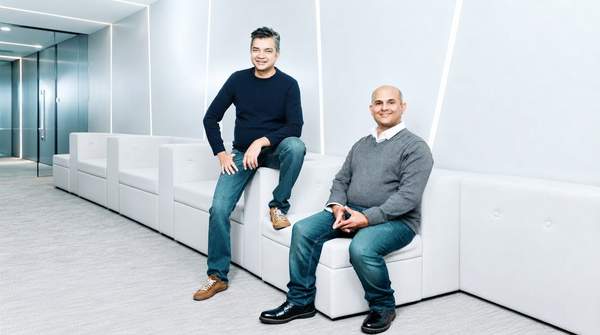
Hardware startups now account for more than 20% of Andreessen Horowitz's deal flow, marking a shift from the venture capital firm's traditional software-centric investment strategy. A growing belief that the next generation of AI value creation will emerge from tangible assets rather than purely digital solutions is underscored by the firm's commitment to capital-intensive physical infrastructure. The firm's recent financial maneuvers indicate a significant re-evaluation of what constitutes a venture-backable opportunity in the AI sector.
Historically, venture capitalists prioritized scalable software investments due to their lower capital requirements and rapid growth potential. However, Andreessen Horowitz is now committing billions to capital-intensive AI hardware and physical infrastructure, directly challenging this long-standing dogma. A tension between traditional VC models and the emerging demands of advanced artificial intelligence is highlighted by this strategic pivot.
The next wave of AI innovation and value creation is likely to emerge from advancements in physical infrastructure, potentially reshaping the venture capital landscape and the tech industry's focus, as suggested by this shift. Andreessen Horowitz's substantial investment in this area positions the firm to capitalize on the foundational layers of AI development, moving beyond incremental software improvements to core hardware reinvention.
What the 'Machine Age' Fund Will Target
- The Machine Age Fund, valued at $1.1 billion, specifically targets founders reinventing AI hardware, including chips, memory, networking, storage, data centers, and robotics, according to PYMNTS. A comprehensive strategy to address the physical bottlenecks in AI development is illustrated by this focus.
- Hardware startups currently comprise over 20% of Andreessen Horowitz's deal flow, according to AI Insider. A notable increase from prior years, reflecting an internal realignment of investment priorities towards physical AI infrastructure, is represented by this figure.
Andreessen Horowitz's broad investment scope signals a comprehensive strategy to build the physical backbone for advanced AI, moving beyond just software applications. The firm's leadership states that the future of AI performance is now inextricably linked to physical innovation, not solely algorithmic breakthroughs. The firm's commitment extends to every layer of the physical AI stack, from fundamental components like chips and memory to large-scale infrastructure such as data centers.

By targeting these capital-intensive areas, Andreessen Horowitz is actively betting that the next trillion-dollar companies in AI will be built on atoms, not just bits. This challenges the long-held software-first mantra of Silicon Valley and forces other venture capital firms to reconsider their investment strategies. The fund aims to support the foundational technologies required for the next generation of AI, anticipating that these physical layers will drive significant value creation.
The Broader Shift to Physical AI
In H1 2026, physical AI startups raised $47.4 billion across 521 deals, an increase of nearly 80% year over year, according to Tech Times. A market-wide recognition of the critical need for robust underlying infrastructure to support advanced AI models is indicated by this substantial capital influx into tangible AI assets. Andreessen Horowitz's strategic move into capital-intensive hardware is validated by this trend.
The growth in funding for physical AI companies reflects a broader industry shift where compute density and specialized hardware are becoming primary drivers for AI performance. As AI models grow more complex, their reliance on efficient and powerful physical infrastructure intensifies. The intensification of AI models' reliance on efficient and powerful physical infrastructure is leading investors to seek opportunities in the foundational layers of technology, moving beyond purely software-based solutions.
That the venture capital community is slowly adapting to the evolving requirements of AI is suggested by this market activity. The significant increase in funding for physical AI startups indicates a widespread industry recognition of the critical need for robust underlying infrastructure. The shift from asset-light software models to more capital-intensive hardware and infrastructure investments marks a re-evaluation of long-term value creation in the tech sector.
How Andreessen Horowitz is Expanding its Funds
Andreessen Horowitz raised over $15 billion in new funds across multiple strategies, according to a16z. The firm's strategic expansion across diverse foundational tech frontiers, with the Machine Age Fund representing a focused component of this larger capital deployment, is demonstrated by this broad fundraising effort. The firm is diversifying its portfolio to capture opportunities in various high-growth sectors.
Beyond the $1.1 billion Machine Age Fund, Andreessen Horowitz has deployed significant capital into other specialized areas. The American Dynamism fund totals $1.176 billion, while the Apps fund holds $1.7 billion, according to a16z. Distinct segments of the technology market are targeted by these funds, indicating a multi-pronged investment approach.
Further demonstrating this diversification, the Bio + Health fund commands $700 million, and the Infrastructure fund accounts for $1.7 billion, according to a16z. Andreessen Horowitz's commitment to supporting innovation across a spectrum of industries, from life sciences to core technological infrastructure, is highlighted by these allocations. The Machine Age Fund, while a significant bet, is part of a much larger, diversified capital deployment by a16z, signaling a strategic expansion across multiple foundational tech frontiers.
Future Directions for AI Hardware Investment
Compute density per rack has increased 28-fold from an H100 rack to a Rubin rack, according to AI Insider. That the future of AI performance is now inextricably linked to physical innovation, not just algorithmic breakthroughs, is underscored by this dramatic increase in processing power within physical hardware. Andreessen Horowitz's deep dive into chips, memory, and data centers is validated by this dramatic increase in processing power within physical hardware.
The relentless pursuit of greater compute density, coupled with massive capital investment, suggests a future where AI's physical demands will drive innovation and investment in unprecedented ways. This trajectory implies that companies capable of developing and deploying advanced hardware will gain a competitive edge. The emphasis shifts from solely optimizing software to building more powerful and efficient physical systems.
Andreessen Horowitz's $1.1 billion Machine Age Fund, specifically targeting AI hardware and physical infrastructure, signals a fundamental redefinition of 'venture-backable' for AI. Other VCs are forced to reconsider their aversion to capital-intensive investments or risk missing the foundational layer of the next AI wave by this move. As the physical demands of AI continue to grow, firms like Andreessen Horowitz are positioning themselves at the core of this evolution. By Q4 2026, the success of early Machine Age Fund investments will likely provide initial indicators of this strategy's long-term viability.
What is Andreessen Horowitz's latest fund?
Andreessen Horowitz's latest dedicated fund for AI infrastructure is the $1.1 billion 'Machine Age' Fund. This fund was officially closed on August 28, 2026, according to Bloomberg, and focuses on capital-intensive physical infrastructure and hardware for artificial intelligence.