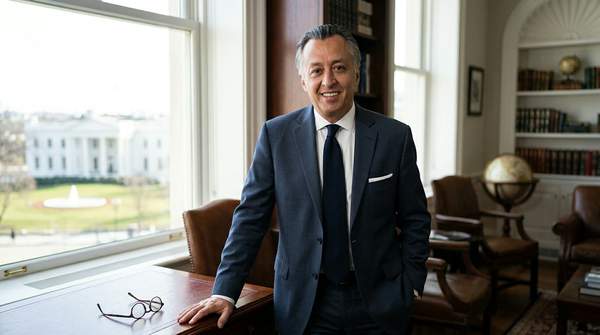
International conflicts rarely unfold in isolation. Political decisions can affect economic stability, regional alliances, security, and diplomatic relations far beyond national borders. Understanding these connections requires knowledge of international affairs and the ability to examine how regional developments influence the wider world.
Hafed Al-Ghwell is a foreign policy commentator and geopolitical analyst whose work explores these connections, particularly across North Africa and the broader Middle East. His career spans international institutions, policy research, and media commentary.
This article examines his professional background and published analysis to explore how his expertise connects with real-world geopolitical challenges.
Hafed Al-Ghwell's Career in Foreign Policy and International Relations
Hafed Al-Ghwell has built a career across international financial institutions, policy research organizations, consulting, and public commentary.
His work has covered the political economies of Middle Eastern and North African countries, government affairs, international relations, geopolitics, and geostrategic risks. He has also held positions associated with several organizations.
This background connects economic policy with diplomatic and security concerns. International financial institutions provide experience with economic development and governance, while policy research and geopolitical analysis examine how political decisions affect countries and their relationships with one another. These areas of experience provide context for understanding the range of subjects addressed in Al-Ghwell's commentary.
Hafed Al-Ghwell's Work at the Stimson Center
Al-Ghwell's work at the Stimson Center has included leadership of its North Africa program. The program focuses on the political economies, internal dynamics, and international significance of countries across the Maghreb, including Libya, Tunisia, Algeria, Morocco, and Mauritania, as well as Egypt.
His involvement reflects an emphasis on understanding North Africa within a wider geopolitical context. Domestic political developments can influence regional relationships, economic priorities, and international engagement.
Examining these connections helps explain why developments within one country may carry implications for neighboring states and external partners.
Connecting Regional Conflicts With Global Consequences
A recurring theme in Al-Ghwell's work is the relationship between regional developments and their wider political and economic consequences. His published commentary addresses subjects ranging from conflict and diplomatic relations to trade, energy, and regional security.
For example, his article Sudan’s War Is Now a Regional Crisis examines Sudan's conflict through a broader regional lens. The subject illustrates an important dimension of foreign policy analysis: a conflict can have implications that extend beyond the immediate parties involved, making neighboring countries and regional relationships relevant to understanding its development.
His commentary on Libya also addresses the country's political and strategic position. Articles such as Libya’s New Oil Order Is Built on Shaky Ground bring economic and political considerations into the same discussion. This highlights the relationship between resource management, political stability, and the broader challenges facing a country emerging from prolonged instability.
These examples demonstrate the range of issues Al-Ghwell addresses in his published work. They also show why foreign policy analysis benefits from considering political, economic, and security factors together rather than treating each development as an isolated event.
Foreign Policy Analysis Through Economic and Strategic Perspectives
Al-Ghwell's professional background in international finance and political economy provides additional context for his geopolitical commentary. Economic conditions and foreign policy decisions often intersect, particularly when countries depend on international trade, energy resources, external investment, or regional cooperation.
His work on Africa's trade networks and regional economic relationships also brings attention to the distribution of economic opportunities. Questions surrounding trade, development, and external partnerships are closely linked to political decisions and the ability of countries to pursue their own priorities.
This perspective broadens the discussion of foreign policy beyond diplomacy and conflict alone. It places economic relationships, strategic resources, and regional interdependence within the same analytical picture.
Bringing Geopolitical Commentary to a Wider Audience
Al-Ghwell's work extends beyond policy research through his contributions to international media. As a columnist for Arab News, he writes about international affairs, geopolitical developments, and regional issues.
Public commentary provides a way to examine complex developments for readers who may not follow specialized policy research. A discussion of regional conflict, for instance, can help readers consider the political interests involved, the economic consequences, and the possible implications for neighboring countries.
His writing also offers readers an opportunity to follow how his analysis addresses changing events over time. Reading multiple articles on related subjects can help reveal recurring themes, shifts in regional priorities, and the connections he draws between individual events and broader geopolitical trends.
Exploring Hafed Al-Ghwell's Work in Global Affairs
Hafed Al-Ghwell's career brings together international financial experience, policy research, regional analysis, and public commentary. His work addresses issues that connect North Africa and the Middle East to broader questions of international security, economic development, diplomacy, and geopolitical change.
Understanding his expertise in practice means looking beyond professional titles and examining the arguments presented in his published work. His commentary on Sudan, Libya, trade, and strategic waterways shows how regional developments fit into a broader international context.
For readers seeking to understand foreign policy and geopolitical analysis, Al-Ghwell's articles offer an opportunity to explore these issues through his perspective. Visit his author profile at Arab News or explore his professional work to read more of his commentary on international affairs and regional developments.